
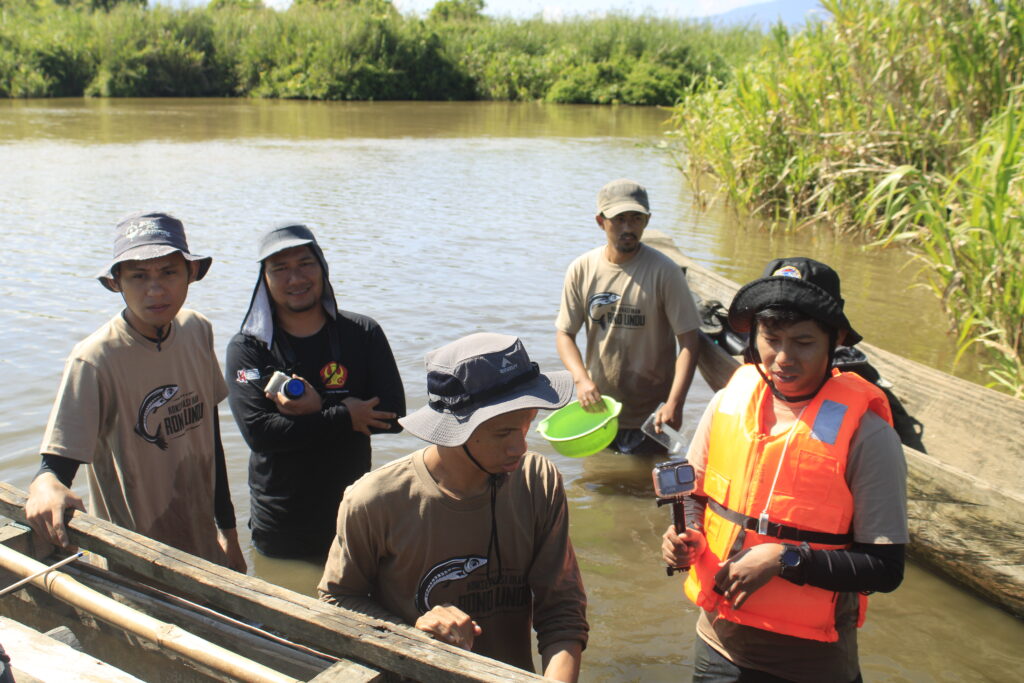
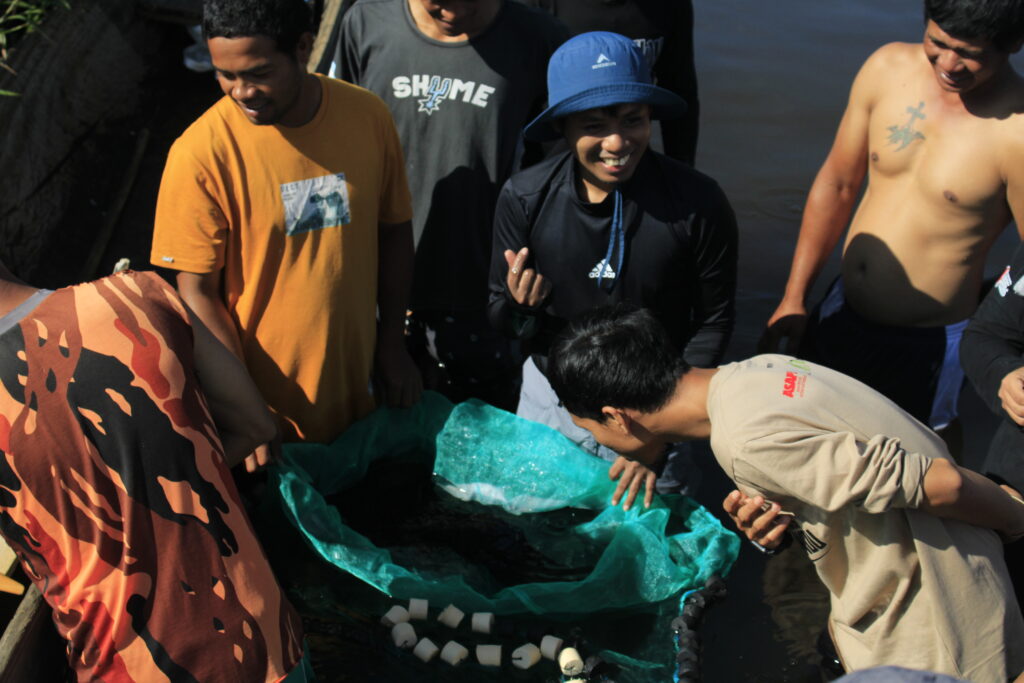
The survey was conducted at seven stations, each with unique location characteristics. Station 1, Ngangang Kati, is surrounded by bushes and Dali plants. Station 2, Air Dingin, is situated in the inlet area of Lake Lindu. Station 3, Palili, is located at the outlet area of Lake Lindu. Station 4, Paku, is situated in the rice fields of Lake Lindu. Station 5, Tomado, is located in a residential area with a high population activity. Station 6, Island, describes the population around the islands in Lake Lindu. Station 7, Kapua, is situated around the island and lakeside. At each station, the number of observed populations of X. sarasinorum varies, with some stations having many, few, or no populations. The stations with the highest populations of X. sarasinorum are stations 1, 6, and 7. Station 1 is characterized by bushes and Dali plants, while stations 6 and 7 are located around the islands formed in Lake Lindu. The environmental DNA (eDNA) analysis results indicate that the species Oreochromis sp. exhibits a notably high relative abundance. Based on observations and interviews with 15 fishermen around Lake Lindu, it is evident that the average number of community catches per month is quite high, indicating an abundance of invasive species in the lake. The most commonly caught invasive fish species include goldfish (Cyprinus carpio), tilapia (Oreochromis niloticus), catfish (Clarias batrachus), nilem (Osteochilus vittatus), gourami (Osphronemus gourami), and snakehead (Channa striata). The fishing gear commonly used by the community includes fishing rods, trawls, and traps (traditional fishing gear).
Project Supporter: